

Further Resources

There is a range of useful links and resources on this page, which are made available to support practice educators, practice assessors and practice supervisors. Use a link below to go straight to the section of interest or scroll down to browse the page.

ASSESSMENT SUPPORT

NMC STANDARDS

STUDENT FLEXIBLE WORKING

PAN LONDON EDUCATIONAL AUDIT TOOL

CAPITAL NURSE

STEP

COLLABORATIVE LEARNING

ASSESSMENT

SUPPORT

NMC

STANDARDS

STUDENT

FLEXIBLE

WORKING

PAN

LONDON

EDUCATIONAL

AUDIT TOOL

CAPITAL

NURSE

STEP

COLLABORATIVE

LEARNING

Assessment Support

The resources in this section provide additional guidance aimed at supporting students, practice supervisors and practice assessors undertaking assessments.

Proficiency Mapping

These documents are intended as guides to clarify the proficiencies required at each stage (Part) of pre-registration nursing and nursing associate programmes. It provides students, practice assessors and practice supervisors with a structured summary of competencies, supporting a shared understanding of expectations and objectives. By specifying the proficiencies to be completed in each Part, the document seeks to facilitate the assessment process by making it more transparent and manageable.

Assessment of Proficiencies in Practice

Pre-registration student nurses must achieve all the Standards of Proficiency for Registered Nurses (NMC, 2018a), but the NMC states ‘the level of expertise and knowledge required will vary depending on the chosen field of practice’. Students should achieve the proficiencies in practice, wherever possible. Some proficiencies may be difficult to demonstrate in some fields due to the nature of the service and the model of care delivery. This guide sets out a Pan London approach to the assessment of 12 of these proficiencies. This document is an update of the original and includes new guidance and case studies, developed in collaboration with practice and academic colleagues.

Assessment of Episodes of Care

In these guides we look at what constitutes good episode of care assessments, including how they relate to learning outcomes and proficiencies. The documents provides comprehensive guidance for each episode of care assessment that is required at each stage (Part) of pre-registration nursing and nursing associate programmes.

Worked Assessment Examples

This document contains examples of key forms from the Nursing PLPAD 2.0 and the England Nursing Associate PAD that need to be completed as part of the student assessment.

Whether the forms are the responsibility of the Practice Supervisor (e.g. initial interview) or Practice Assessor (e.g. action plan), these examples will be of value to any staff member involved in learning and assessment.

Curricula Guide Template

This template is provided to enable universities to consistently document their programme curricula. Most universities already provide detailed curriculum information to practice partners, but this varies in structure and layout. Based on feedback from practice colleagues, using a common template will help with the assimilation of this information. Universities are requested to provide their curricula guides to practice partners using this template.

NMC Standards

The NMC’s standards of proficiency are outcome focused, representing the skills, knowledge and attributes all nurses must demonstrate. Click on a link below for the relevant page on the NMC website.

STANDARDS FRAMEWORK FOR NURSING AND MIDWIFERY EDUCATION

STANDARDS FOR STUDENT SUPERVISION AND ASSESSMENT

STANDARDS FOR PRE-REGISTRATION NURSING PROGRAMMES

STANDARDS FOR
PRE-REGISTRATION NURSING ASSOCIATE PROGRAMMES

STANDARDS OF PROFICIENCY FOR REGISTERED NURSES

STANDARDS

FRAMEWORK

FOR NURSING

AND

MIDWIFERY

EDUCATION

STANDARDS

FOR

STUDENT

SUPERVISION

AND

ASSESSMENT

STANDARDS

FOR

PREREGISTRATION

NURSING

PROGRAMMES

STANDARDS

FOR

PREREGISTRATION

NURSING

ASSOCIATE

PROGRAMMES

STANDARDS

OF

PROFICIENCY

FOR

REGISTERED

NURSES

Student Flexible Working

Following a successful pilot across the London area in 2024, NHSE are endorsing the roll-out of student flexible working arrangements across London, with the support of the PLPLG and practice partners. The project was part of the RePAIR programme and based on Guy’s and St Thomas’ NHS Foundation Trust’s implementation of flexible working arrangements for students, which began in 2019.

It has proved popular with students who have childcare, financial or other commitments, and are balancing these with practice placements. Evidence shows that it has supported students to complete their practice placements, and is potentially a tool for reducing student attrition. This section contains useful guidance and templates to assist with implementation.

Please watch these video testimonials on the positive impact flexible working can have from students Patrick, Michael and Magda.

These documents can be used by any organisation wishing to implement student flexible working. Formatting and wording may be amended to suit organisational processes and logos may be added, however:

  • The principles of student flexible working must not be changed
  • NHSE London region must be credited and their logo must remain

Flexible Working for Student Nurses and Midwives – a Framework

This framework was developed in consultation with stakeholders across the London region, and with colleagues from Advance HE to provide a model of good practice for student flexible working.

The following templates and guides are provided to assist with setting up flexible working in your area. Please download and adjust as necessary to reflect local agreements.

GSTT Student Flexible Working Policy
(example provided for information)

Student Flexible Working Training Pack

Pan London Educational Audit Tool

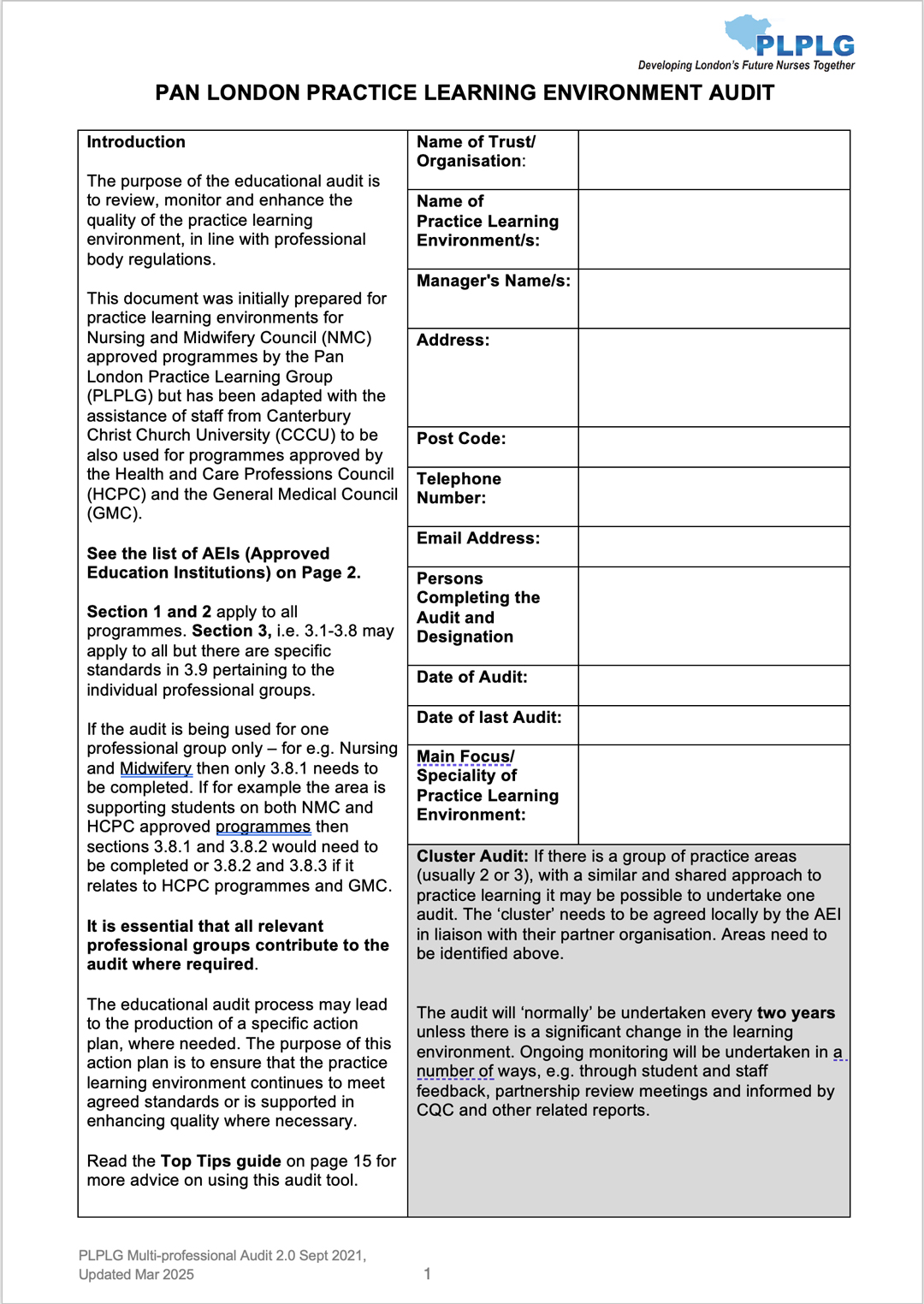
The purpose of the educational audit is to review, monitor and enhance the quality of the practice learning environment, in line with professional body regulations.

This document was initially prepared for practice learning environments for Nursing and Midwifery Council (NMC) approved programmes bythe Pan London Practice Learning Group (PLPLG) but has been adapted with the assistance of staff from Canterbury Christ Church University (CCCU) to be also used for programmes approved by the Health and Care Professions Council (HCPC) and the General Medical Council (GMC). It has been updated with minor amendments in March 2025.

CapitalNurse

The CapitalNurse Digital Career Framework Tool helps nurses of all levels review their career progress, set and work towards career goals and help build professional confidence to reach them. The tool is closely aligned to the NMCs requirements for revalidation. Click here for full details.

Preceptorship is a period to guide and support all newly qualified practitioners in the transition from student to autonomous practitioner. CapitalNurse developed a Preceptorship Framework, since adopted by NHS England, that provides a recommended set of standards based on best-practice. Click here for full details.
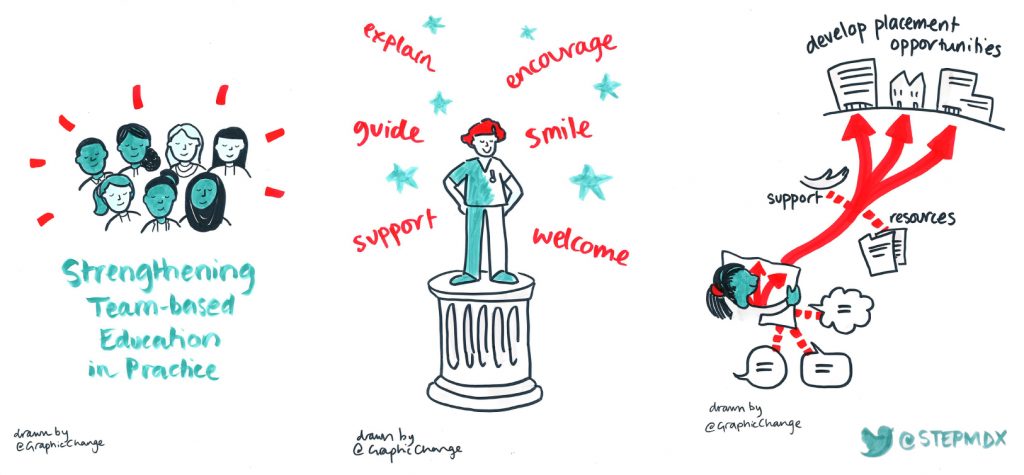
 

STEP – Strengthening Team-based Education in Practice

The STEP (Strengthening Team-based Education in Practice) project involves a number of practice and university colleagues from across North Central and East London region who are passionate about learning in practice for nursing and midwifery learners.

Led by Middlesex University and funded by Health Education England this project team have undertaken a number of individual research projects related to 5 key themes and have developed a range of resources to enhance the learner experience.

Collaborative Learning

This resource aims to provide guidance and direction to those considering the implementation of new models to enhance practice learning, provide new learning opportunities and potentially increase student capacity in some placement areas.

It aims to support integrating the principles of coaching and peer learning into every-day practice where it may not be practical to achieve full implementation of collaborative learning models